
Disconnected operational systems
Planning, inventory, warehouse, transport, partner and customer information may be spread across different applications and manual records.
Logistics & Supply Chain Technology Solutions
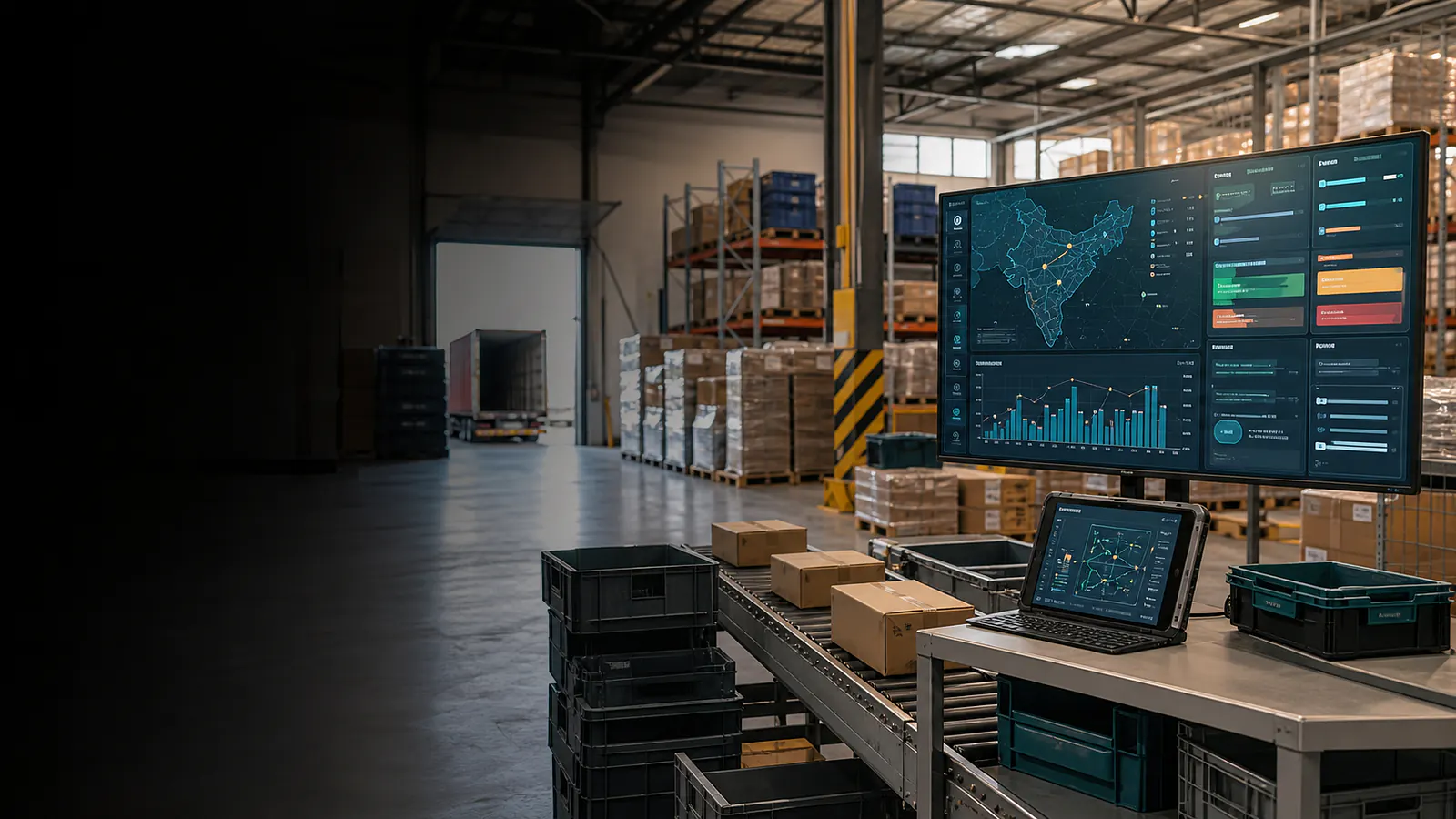
Logistics and supply chain organizations need technology that connects planning, inventory, warehousing, transportation, partners and customer communication without adding unnecessary complexity. SunSolv helps create integrated platforms, connected data and practical workflows shaped around how goods and information move.
Logistics context
A logistics journey can involve demand planning, procurement, inventory, warehousing, fulfilment, transportation, delivery, returns and customer communication. Each stage depends on timely information moving between teams, facilities, systems and partners.
When these activities operate separately, teams may spend more time reconciling records, locating updates and responding to avoidable uncertainty. SunSolv begins by understanding the complete operational flow so that technology supports the movement of goods without disconnecting the information and responsibilities around it.
Common challenges
Planning, inventory, warehouse, transport, partner and customer information may be spread across different applications and manual records.
Incomplete or delayed information can make it difficult for authorized teams to understand current activity and investigate exceptions.
Repeated calls, messages, spreadsheets and data entry can increase effort when plans or shipment conditions change.
Suppliers, carriers, fulfilment providers and customers may use different systems, formats and operating processes.
Routing, approvals, allocation, dispatch, delivery and returns can involve dependencies that are difficult to coordinate consistently.
Existing applications may become harder to maintain or adapt as facilities, partners, volumes and operating requirements change.
Logistics capabilities
Create accessible portals and applications for planning, coordination, status visibility, partner communication and operational administration.
Digitize suitable receiving, storage, allocation, picking, packing, dispatch and inventory-management processes.
Support appropriate workflows for scheduling, routing, dispatch, shipment status, delivery communication and exception handling.
Connect authorized ERP, warehouse, transportation, partner and customer systems through available APIs, events and supported interfaces.
Improve suitable application foundations, environments, scalability, monitoring and operational maintainability.
Bring authorized operational information together and apply appropriate reporting, automation or AI to selected planning and coordination workflows.
Where technology can help
Connect appropriate planning, inventory, order, warehouse and distribution workflows across internal teams and operating locations.
Support receiving, storage, inventory, picking, packing, dispatch, returns and operational visibility.
Improve suitable scheduling, dispatch, status communication, exception handling and operational administration.
Create connected experiences for customers, partners, facilities and internal teams across shared logistics processes.
Improve the coordination of inventory, fulfilment, delivery and returns across digital and physical channels.
Potential outcomes
Help authorized teams understand suitable inventory, shipment, workflow and exception information more easily.
Improve how authorized information and responsibilities move between teams, facilities, systems and partners.
Simplify appropriate repetitive processes and reduce avoidable manual reconciliation.
Give authorized teams clearer information for identifying issues and coordinating an appropriate response.
Create technology that can accommodate suitable changes in facilities, partners, services and operating requirements.
Connected SunSolv services
Make confident technology decisions.
Modernize without disrupting your business.
Build a secure, scalable cloud foundation.
Digital experiences built to perform.
Software shaped around your business.
Turn data and workflows into intelligent capabilities.
Connect visibility with measurable growth.
How we work
Understand the organization, teams, facilities, partners, workflows, systems, information responsibilities, constraints and desired outcomes.
Clarify priorities, user needs, integration requirements, architecture, operational responsibilities and a realistic delivery roadmap.
Design, build, integrate and test with stakeholder involvement, accessibility considerations and appropriate quality controls.
Support adoption, observe technical and operational performance and improve the solution as logistics requirements change.
Frequently asked questions
SunSolv can shape technology engagements for manufacturers, distributors, warehouse and fulfilment operations, transport providers, third-party logistics organizations and connected retail supply networks. The appropriate solution depends on the organization’s users, workflows, systems, partners and priorities.
Where suitable APIs, interfaces and authorized access are available, SunSolv can assess and implement integrations with enterprise resource planning, warehouse management, transportation management and related operational platforms. Vendor limitations, data responsibilities, failure handling and security requirements should be understood during discovery.
Yes. Modernization can begin with a focused workflow, facility, integration, user experience or operational requirement. A phased approach can reduce disruption and provide useful evidence for later decisions.
SunSolv can help connect authorized information from suitable systems and present it through operational applications, portals, dashboards or reports. The available visibility depends on source-system quality, integration access, update frequency and organizational data responsibilities.
AI and automation may be appropriate for selected planning, document, knowledge, support, reporting or exception-management workflows. Their use should have a clear purpose and include suitable human oversight, privacy, security, monitoring and limitations.
It begins with a discovery conversation about the organization, teams, facilities, partners, current systems, operational challenges and desired outcomes. SunSolv can then recommend an assessment, focused advisory engagement or practical delivery phase.
Start with your logistics priorities
Tell us about the goods, teams, facilities, partners or systems you want to connect. We will help you identify a practical technology direction and the right next step.
Start a Project