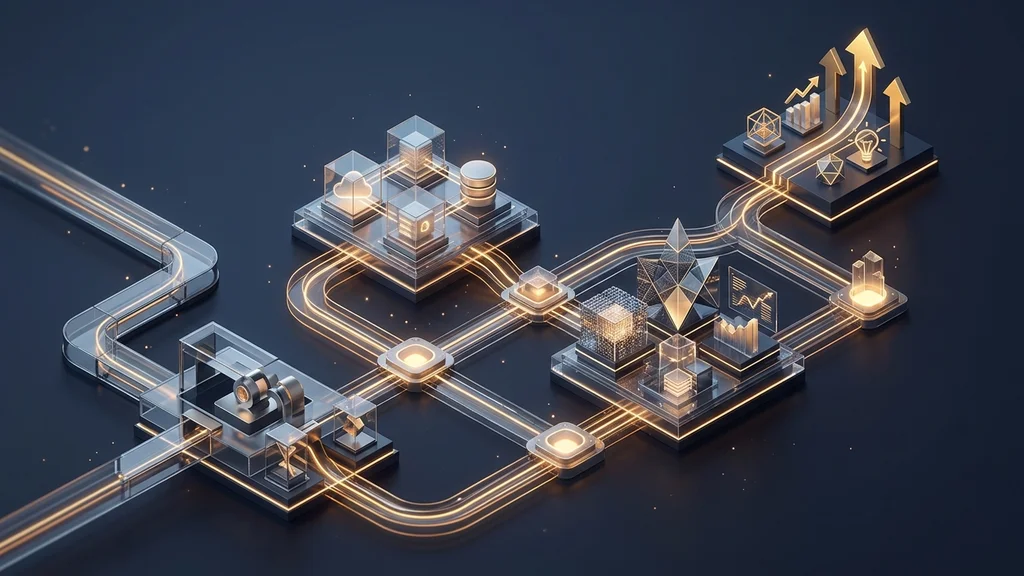
Legacy software decisions should not be guided by technological age alone, but by business value alignment and architectural friction. By evaluating existing systems across business fit, technical stability, and integration extensibility, leadership can choose the right path: Modernize in place to preserve core business logic, Integrate via modern API layers to unlock data silos, or Replace entirely when maintenance costs and obsolescence threaten business survival.
Legacy Modernization Pathways Comparison
| Evaluation Dimension | Option 1: Modernize in Place | Option 2: Integrate via APIs | Option 3: Full Replacement |
|---|---|---|---|
| Primary Trigger | Database and business logic are sound, but the UI is outdated, slow, or inaccessible on mobile | Core system works well for internal operations, but external systems/partners need data access | Underlying language is obsolete, vendor is defunct, and system cannot support growth |
| Implementation Cost | Moderate (30%–50% of full rewrite cost) | Low to Moderate (15%–30% of full rewrite cost) | High (100% of capital expenditure) |
| Business Disruption Risk | Low (Core database transactions remain stable and unchanged) | Very Low (Existing system continues running without internal process changes) | High (Requires massive data migration, staff retraining, and workflow re-engineering) |
| Time to First Value | 3 to 6 months | 6 to 12 weeks | 12 to 24 months |
| Long-Term Extensibility | High (Decoupled modern frontend and modular service layers) | Moderate (Legacy core remains a maintenance dependency over time) | Highest (Fully modern cloud architecture and native API integrations) |
The Legacy System Conundrum
Legacy systems are often both a company's greatest operational asset and its biggest innovation bottleneck.
A system is termed "legacy" not merely because it is old, but because it is critical to the daily operation of the enterprise yet resistant to change. Many mid-market businesses rely on proprietary accounting, inventory, or ERP systems built ten to twenty years ago on Visual Basic, Delphi, on-premises SQL Server, or monolithic PHP.
These systems encapsulate decades of nuanced, specialized business rules that off-the-shelf software cannot replicate. However, they lack mobile interfaces, cannot easily interface with modern cloud APIs, rely on aging servers, and depend on developers nearing retirement.
Faced with these challenges, executives often lurch between two extremes: doing nothing until a catastrophic outage occurs, or commissioning a high-risk multi-million-dollar "big-bang" replacement that collapses under its own complexity. An objective architectural evaluation provides a safer, disciplined path forward.
Deciding whether to update or replace core systems forms a critical milestone within any practical digital transformation roadmap.
The Three Modernization Pathways
Organizations can address legacy software through three distinct strategies: Modernize, Integrate, or Replace.
Depending on the health of the underlying database and business logic, leadership has three clear options:
- Modernize (Refactor / Re-platform in Place): Retain the existing relational database and core data model, but rewrite the user interface in a modern web framework (such as Angular or React) and refactor the backend into clean REST/GraphQL services. This preserves proprietary business logic while providing modern user experiences.
- Integrate (Wrap with API Gateway): Keep the legacy system running completely intact as an internal transaction engine, but build a secure API wrapper layer around it. Modern mobile apps, customer portals, and third-party SaaS can interact with the legacy core via standard webhooks and JSON payloads without touching the legacy code.
- Replace (Retire and Re-platform): Decommission the legacy software entirely and transition to a purpose-built custom web application or modern commercial SaaS platform. This is appropriate when the legacy software is fundamentally unmaintainable, insecure, or unsupported by modern hardware.
The API Wrapper Strategy: Extending Life Without Rewrites
Building modern REST APIs on top of legacy databases delivers modern digital capability at a fraction of rewrite costs.
For many organizations, the underlying database schema of their legacy system is sound, but the desktop user interface is clunky and inaccessible outside the office VPN.
By deploying a modern, secure middleware layer that interfaces directly with the legacy database (or taps into existing stored procedures), engineering teams can create a standardized API gateway. Frontline technicians and sales teams gain fast, responsive web portals and mobile access on iPads or phones, while the back-office accounting team continues using their familiar desktop application without disruption.
This API wrapping strategy provides immediate digital experience improvements and buys the organization years of breathing room to plan a measured, phased migration.
Hypothetical Example: 15-Year-Old Billing & Inventory Core
How a regional distribution firm used API integration and web portals to avoid a $500,000 system replacement.
Consider a hypothetical distributor with $60M in annual revenue operating on a legacy 2011 on-premises ERP. The software managed 40,000 SKUs, custom customer pricing tiers, and warehouse bin locations flawlessly, but customers could not view their invoices or place orders online without emailing customer support.
Enterprise software vendors quoted $500,000 to replace the ERP with a major cloud suite, with an estimated 18-month migration timeline. Recognizing the immense risk of disrupting daily warehouse dispatches, leadership chose an Integrate & Modernize approach instead.
The engineering team built a secure Node.js/PostgreSQL micro-service that mirrored customer order and invoice data in real time via read-only replication, exposing clean REST APIs to a responsive Angular customer portal. Customers gained self-service ordering, invoice downloads, and shipment tracking in four months for $85,000, while the core warehouse continued operating on the proven legacy ERP with zero downtime.
The Perils of the "Big-Bang" Replacement
Complete system rewrites fail when they attempt to replicate decades of undocumented edge-case business rules at once.
Software architect Martin Fowler describes the big-bang rewrite as a high-risk anti-pattern that almost always encounters severe budget overruns and schedule delays. In any system that has run for ten years, thousands of bug fixes, tax rule edge cases, and client-specific pricing overrides have been encoded into the software—often without documentation. Longitudinal enterprise modernization research, including data from The Standish Group, similarly demonstrates that full-replacement initiatives face high failure rates compared to incremental modernisation.
When an engineering team attempts to rebuild everything from scratch in a new platform, these hidden business rules are discovered only when production launches and critical transactions fail. If replacement is unavoidable, employ the "Strangler Fig Pattern": migrate small functional modules one by one until the legacy system can be safely decommissioned.
Managing Data Synchronization and Cutover Risks
Ensure bidirectional data synchronization, validation reconciliations, and rollback capabilities during transitional phases.
Whether integrating APIs or executing a phased strangler migration, managing data synchronization between the old database and modern services is the greatest technical hurdle.
Engineering teams should establish automated reconciliation scripts that run continuously, verifying record counts, financial balances, and field parity between legacy databases and modern cloud datastores. Building robust event-driven change data capture (CDC) pipelines ensures that both systems stay in lockstep without performance degradation.
Legacy System Modernization Decision Checklist
Assess these critical technical and operational factors before selecting a modernization path.
- The legacy database schema, data integrity, and stored procedures have been audited.
- Total annual maintenance, hosting, and licensing costs of the legacy application are documented.
- Availability of developers skilled in the legacy language/framework has been evaluated.
- Critical business rules and compliance algorithms embedded in the legacy code are mapped.
- Security vulnerabilities, patching support, and operating system compatibility have been reviewed.
- Integration touchpoints required by modern customer and partner workflows are identified.
- The organization has the operational appetite and capacity for staff retraining if replaced.
Preserve Business Logic, Modernize User Experience
A mature legacy system represents significant embedded operational wisdom. Before discarding it in a risky big-bang rewrite, explore API wrapping and selective frontend modernization. Teams can capture the primary self-service and modern integration capabilities of contemporary cloud platforms while preserving validated business rules, containing capital expenditure, and avoiding unnecessary operational exposure.